
Significant societal benefits from Designsystemet
A new Cost–Benefit Analysis shows that Designsystemet delivers clear societal value, both through time saved within organisations and through important, long-term quality benefits for society.
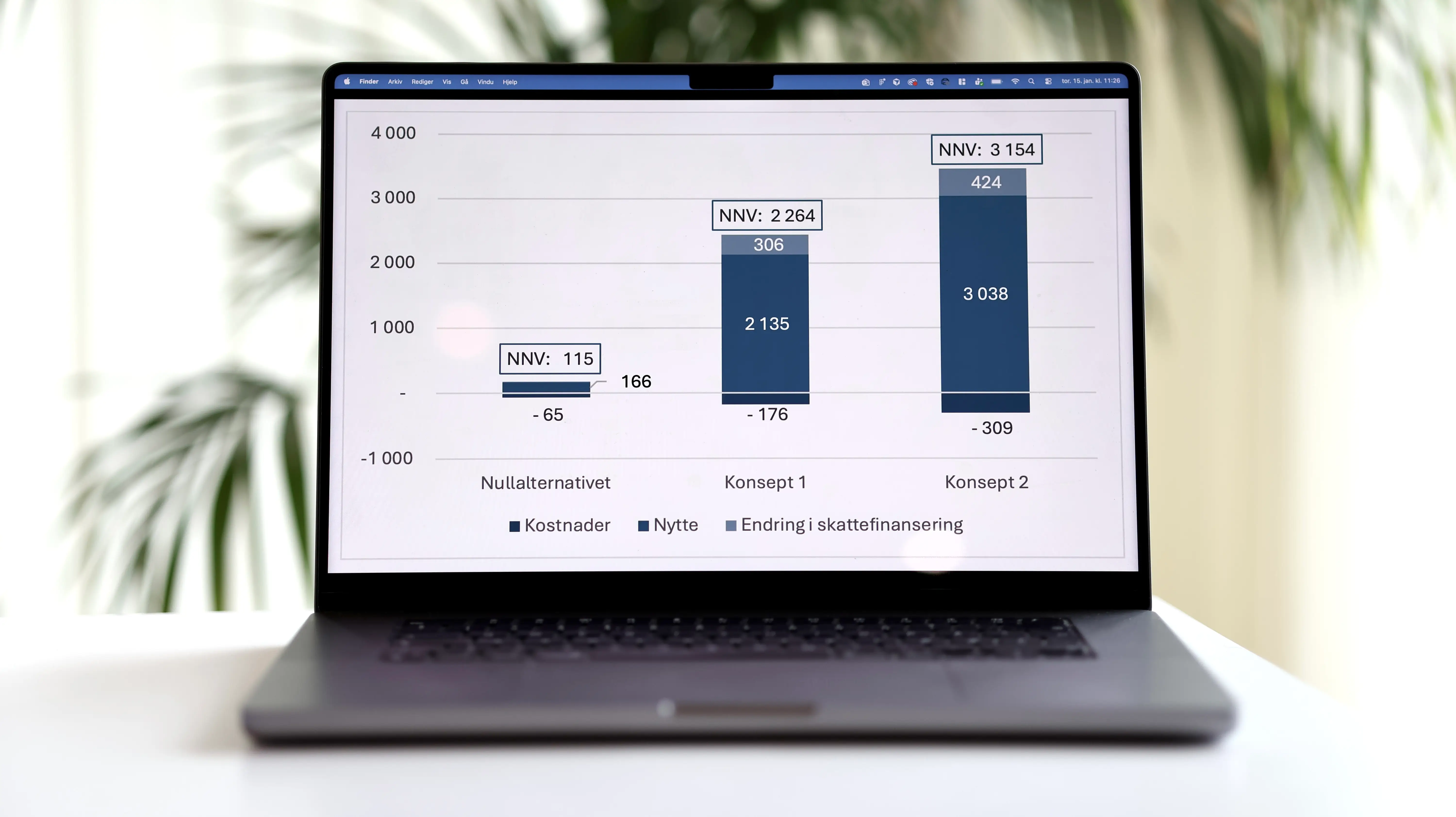
The monetised benefit identified in the Cost-Benefit Analysis (CBA) is time saved in design and development work. In addition, the analysis identifies clear non-monetised benefits, including:
- improved compliance with regulations
- more accessible and understandable digital services
- time saved and reduced cognitive burden for citizens
Taken together, the analysis shows that Designsystemet is a profitable shared investment.
Time saved within organisations
When organisations adopt Designsystemet, teams spend less time creating and maintaining basic components and patterns. This leads to fewer clarifications, more parallel work between design and development, and less time spent on testing and maintenance.
The Cost-Benefit Analysis is based on a conservative assumption of a 25 per cent reduction in time spent on design and development work for organisations that use Designsystemet. Organisations that build their own design systems based on Designsystemet may achieve additional benefits. Further time savings arise because updates, bug fixes, security improvements and adaptations to new requirements can increasingly be handled centrally.
What does this mean for your organisation?Calculate the potential benefits using our calculator
Benefits that cannot be monetised, but still matter
Some of the most important effects cannot be quantified in monetary terms, but are nonetheless crucial to the quality of public digital services.
Improved regulatory compliance
When more solutions are built on the same accessible components and patterns, compliance with requirements for universal design and plain language increases. A well-designed design system is estimated to be able to contribute to compliance with between 30 and 50 per cent of WCAG requirements, provided that it is used correctly.
Time saved for citizens
Recognisable interaction patterns enable users to understand solutions more quickly, spend less time finding their way around, and avoid having to learn the system again each time they encounter a new public service. This reduces both time spent and cognitive load, and contributes to more efficient interactions between citizens and public authorities.
Improved fulfilment of rights and obligations
When solutions become more accessible and easier to understand, more digitally vulnerable users may gain real access to information and services that are necessary to exercise their rights and fulfil their obligations towards the public sector. This can support greater independence and reduce the need for assistance when using digital services.
Want to explore further?
The full Cost–Benefit Analysis (CBA), including methodology, figures and assessments, is openly available in norwegian. The analysis was conducted by Agenda Kaupang on behalf of The Norwegian Digitalisation Agency in autumn 2025.
Cost–Benefit Analysis (CBA):
Designsystemet as a shared solution
(norwegian only)
Do you have feedback or want to contribute?
Join the community, test components in your own services, and share your experiences. This is how we build better digital services for everyone.

Contributors